
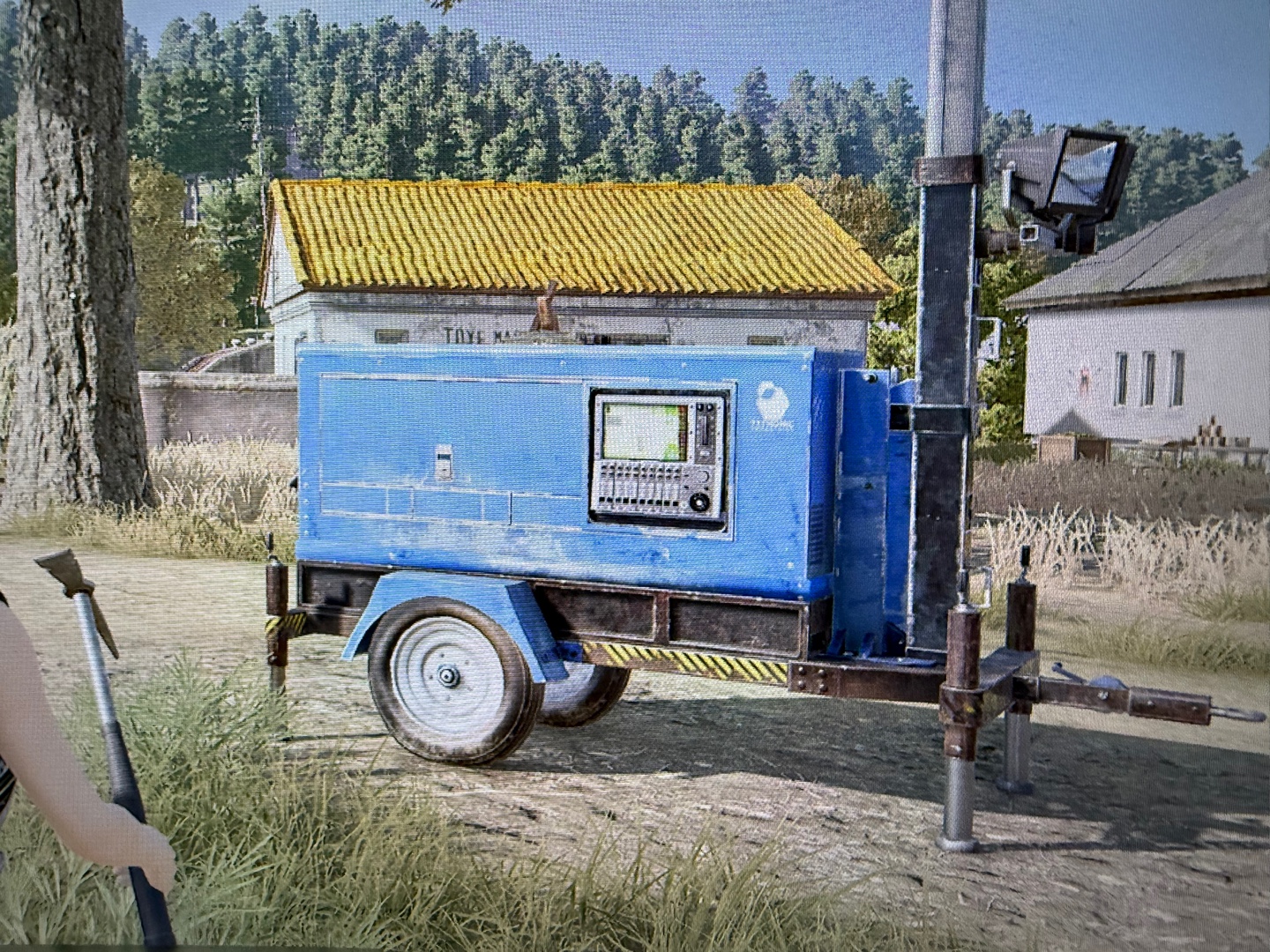
A small logo in the game suggested a corporation far larger than the object it was printed on.
The project began with a Blue Chip Transmitter. On the side of the blue industrial unit was a small TYTHONIC INDUSTRIES mark — unnecessary to gameplay, easy to ignore, yet repeated across research facilities, containers, equipment and Blue Chip-related objects.
The more the company was researched, the larger it became: a life-science corporation associated with extending human life, advanced prosthetics and biotechnology, while also appearing around participant technologies, field equipment and the infrastructure of the Battlegrounds. What existed, however, was not a complete corporate history or identity manual. The information survived as fragments.
Rather than redesigning the logo, this study fills the space between those fragments. It translates lore into Narrative, Verbal Identity and Corporate Identity, then develops the operating language a real multinational organisation would need — Division, Access Level, Product Code, Archive, Field Unit and serial systems.
Branding therefore becomes evidence of world-building. A single mark should imply laboratories, production, security, internal hierarchy and decades of institutional history. The design problem is not simply how the logo looks, but how to make an invisible organisation feel structurally real.
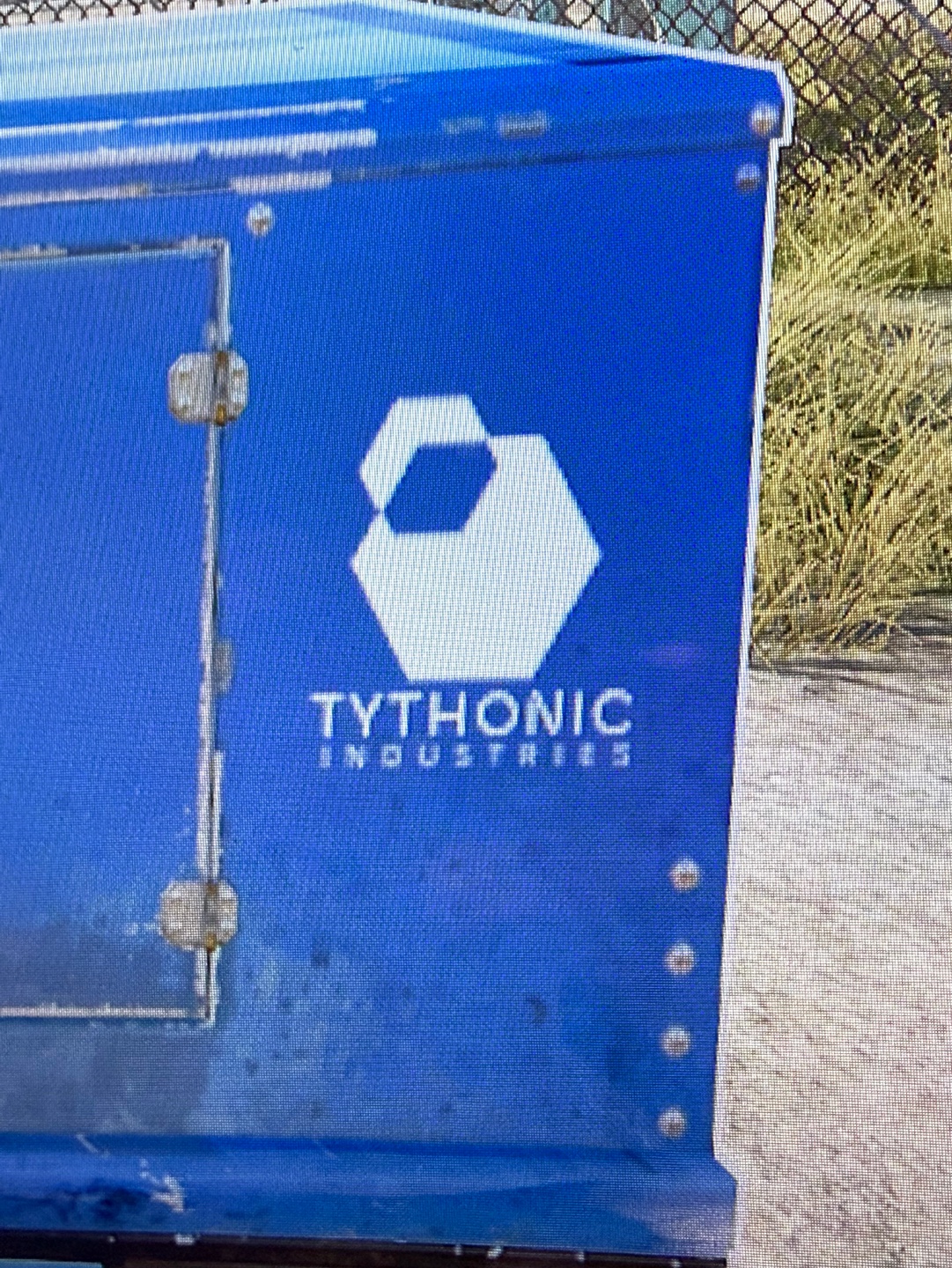
What is TYTHONIC? / World-building Basis
WE PROTECT LIFE.
WE MANAGE SURVIVAL.
Publicly, TYTHONIC belongs to the language of life science: longevity, medicine, biotechnology, prosthetics and protection. Operationally, it appears around Blue Chip technology, participant systems, field equipment, research facilities and communication infrastructure. The identity therefore has to support two realities at once: continuity as a public promise, and control as an internal operating principle.
Longevity, biotechnology, prosthetics and the promise of protecting human life.
Biometric identity technology connecting the individual to a larger continuity system.
Research, production, communication, access control and field systems connected to the Battlegrounds.
Note. The historical sequence below is a conceptual narrative reconstruction based on existing world-building clues. It is developed for this independent design study and is not presented as additional official canon.
Follow the history of the company,
and the Battlegrounds begin to make sense.
This story does not begin with an evil corporation secretly building an arena. It begins with goals that are entirely plausible for a life-science company: extend life, restore damaged bodies, understand biological signals and identify individual patterns.
The dystopian turn appears when those technologies connect. To restore the body, the body has to be read. Once a person can be read as data, that data can be stored, registered, transmitted and linked to a system. Life → Body → Data → Blue Chip → System. The five chapters trace that progression.
The unease does not come from cyberpunk aesthetics. It comes from institutional normality: a highly credible corporation using the language of safety, quality and continuity to make human survival increasingly measurable and administrable.
We wanted to extend life.
It began with a question that sounded humane: can human life last longer?
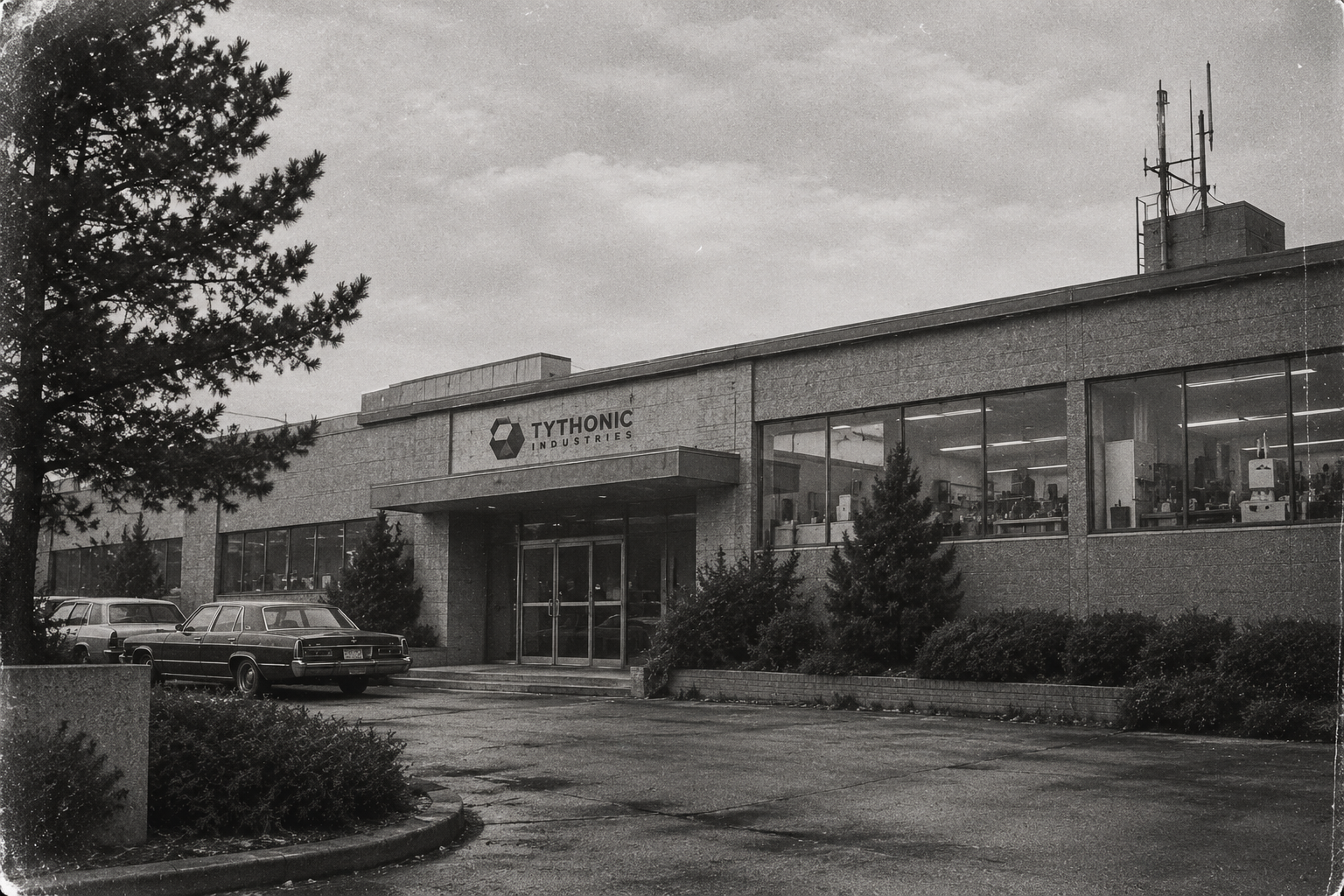
In 1977, TYTHONIC was far removed from the industrial network it would later become. Small facilities, limited equipment and research teams focused on ageing, disease and biological recovery. The company looked like a credible, optimistic life-science institution.
Its defining attitude was more consequential than its size. Life was not treated as mystery, but as something observable, measurable and potentially extendable. That assumption became the first principle behind everything that followed.
Nothing about this stage appears sinister. That normality is important. Systems of control rarely begin by describing themselves as control.
We learned to restore the body.
Extending life was not enough if the body could no longer function.
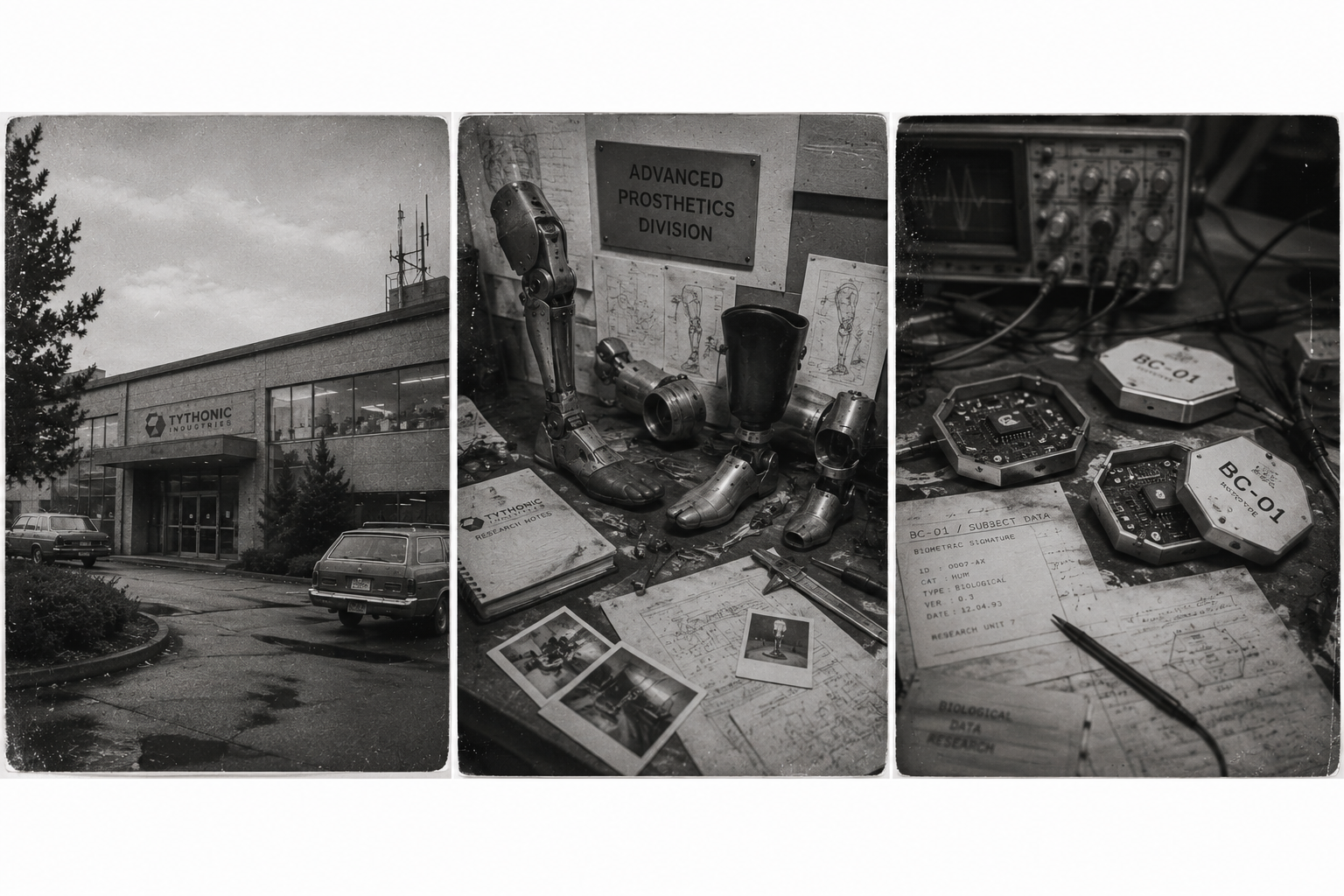
The focus shifts from how long a person survives to how function can be recovered. Prosthetics, artificial joints and the connection between nerves and machines move TYTHONIC from Life Science toward Human Engineering.
The important transformation is conceptual. The body becomes a system that can be decomposed, analysed, substituted and reconnected. Once function is treated as structure, restoration requires increasingly precise knowledge of signals, patterns and individual biological differences.
That requirement leads directly to the next stage: the body must first be read.
We learned to identify life.
To restore the body, TYTHONIC first had to turn the body into information.
Heart rate, blood, neural response, movement and recovery patterns become increasingly precise datasets. Across those datasets, TYTHONIC begins to recognise biological patterns capable of distinguishing one person from another — a Biometric Signature.
The internal vocabulary changes with the research. Patient becomes SUBJECT. Observation becomes DATA. Identity becomes a set of registered values. Technology developed to understand and protect a person can now also classify, track and connect that person.
The dystopian shift starts in language before it appears in imagery: SUBJECT ID, BIOLOGICAL DATA, REGISTERED, ACCESS LEVEL.
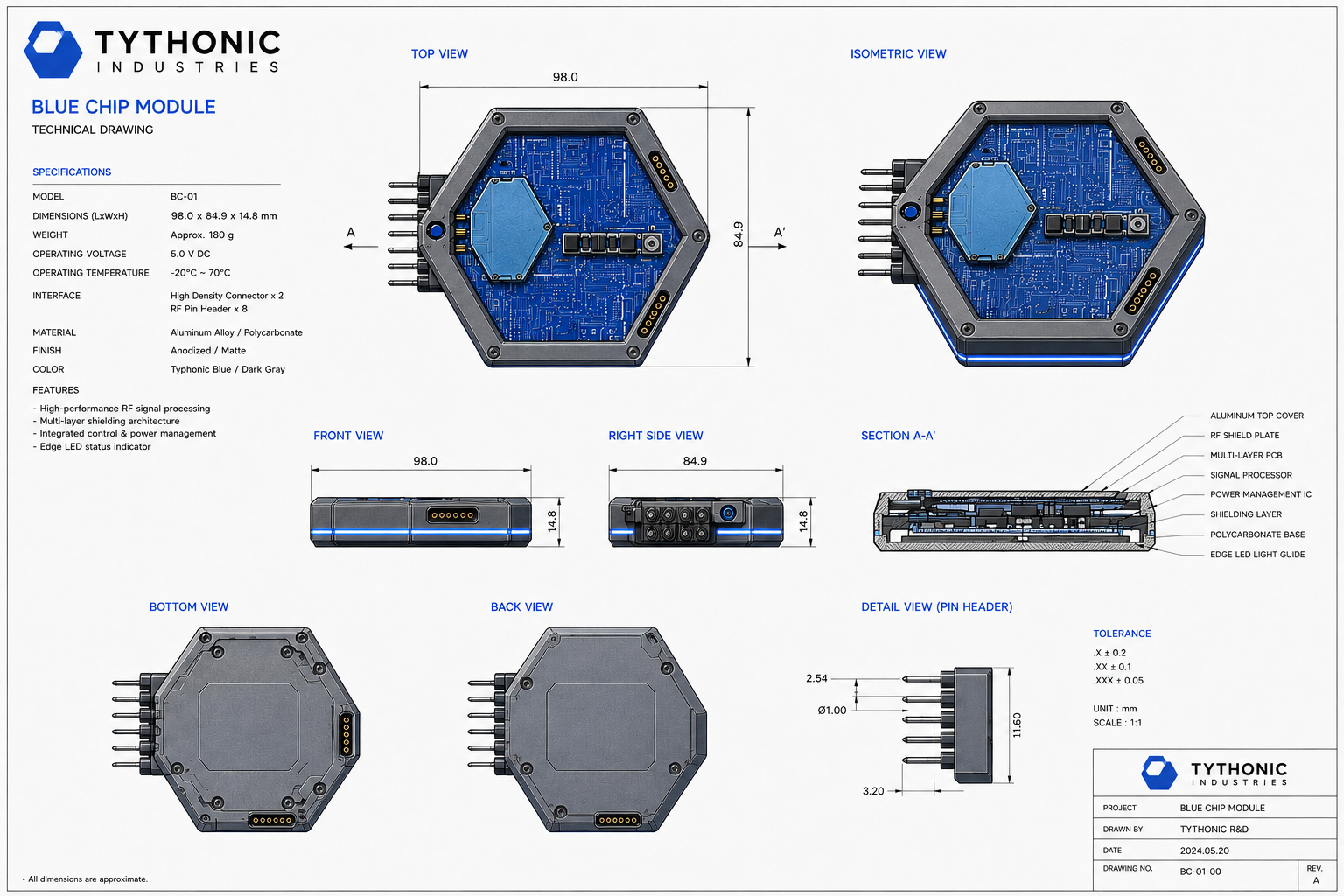
We learned to preserve identity.
Decades of research converge into a small physical module.
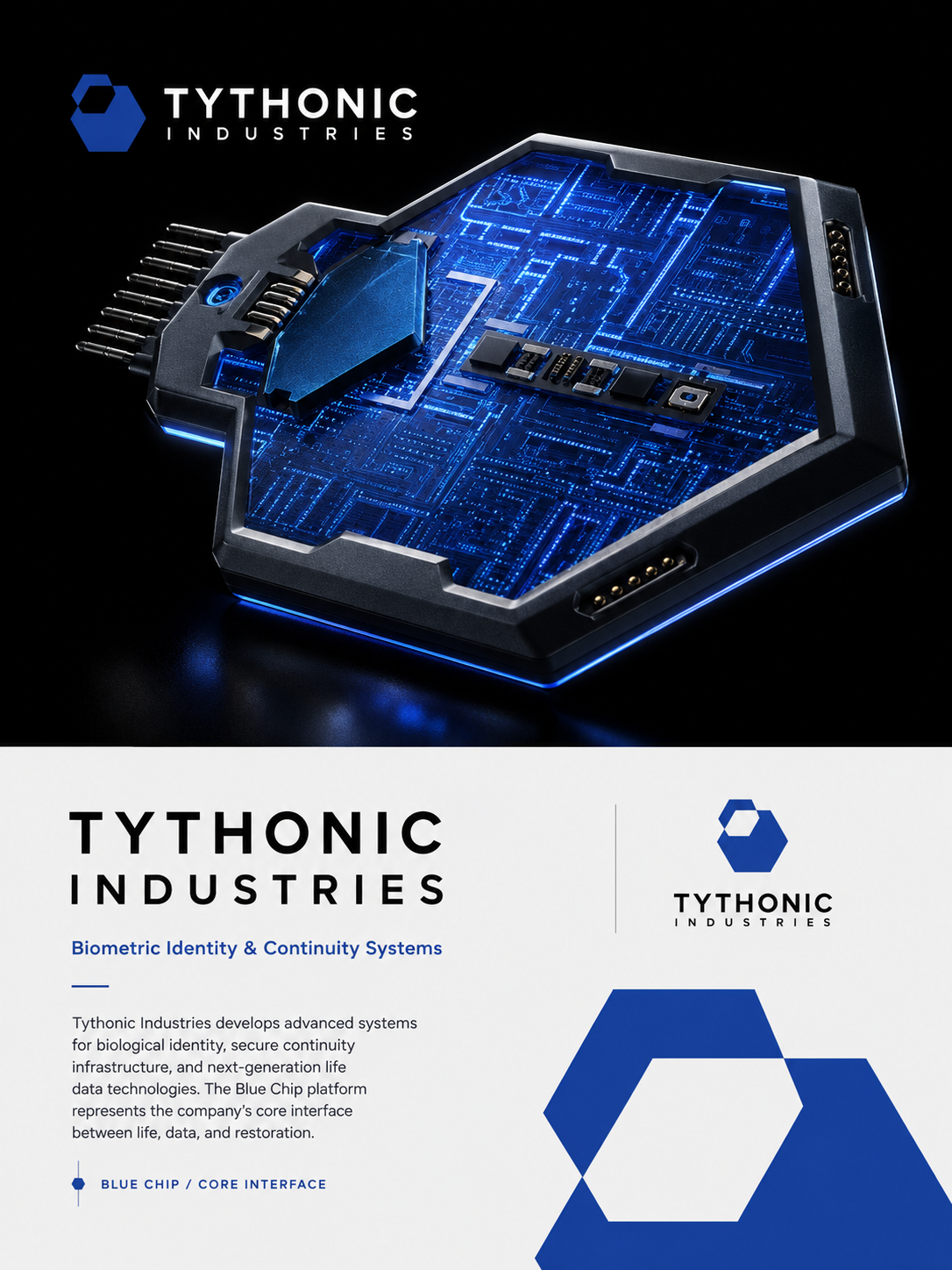
Blue Chip is interpreted here not as an isolated game object but as the compressed result of TYTHONIC's history. Once life can be measured and identity can be recognised, the next step is to preserve that identity and bind it to a larger system.
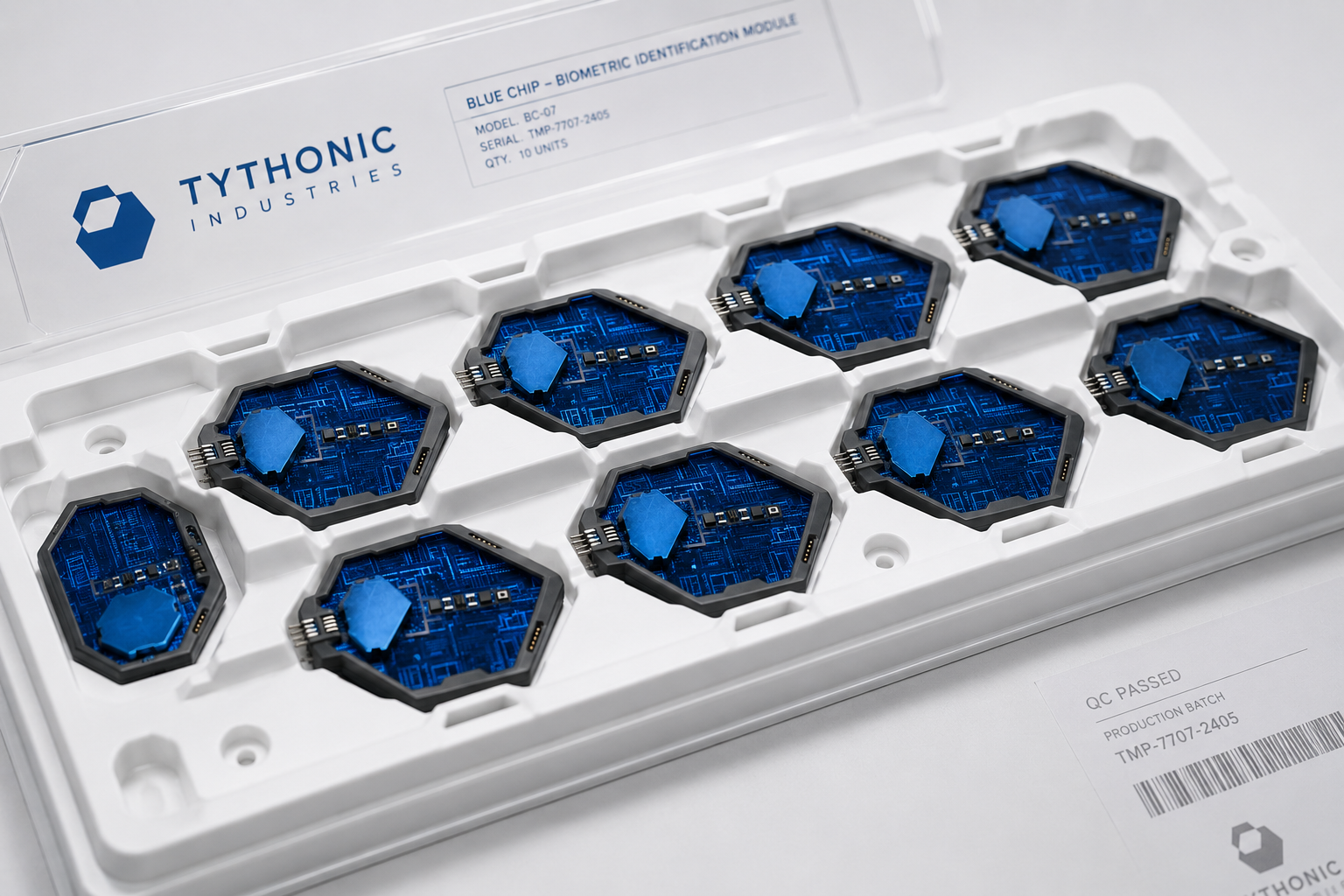
Research becomes industry. Prototypes move into production, QC, trays, labels, serials and maintenance procedures. At this point CI is no longer decoration. It becomes operational language for quality, ownership and authority.
The device then demands infrastructure. Preservation requires transmission; transmission requires a Transmitter; a Transmitter requires communication systems, power, maintenance and field security. A device becomes a network.
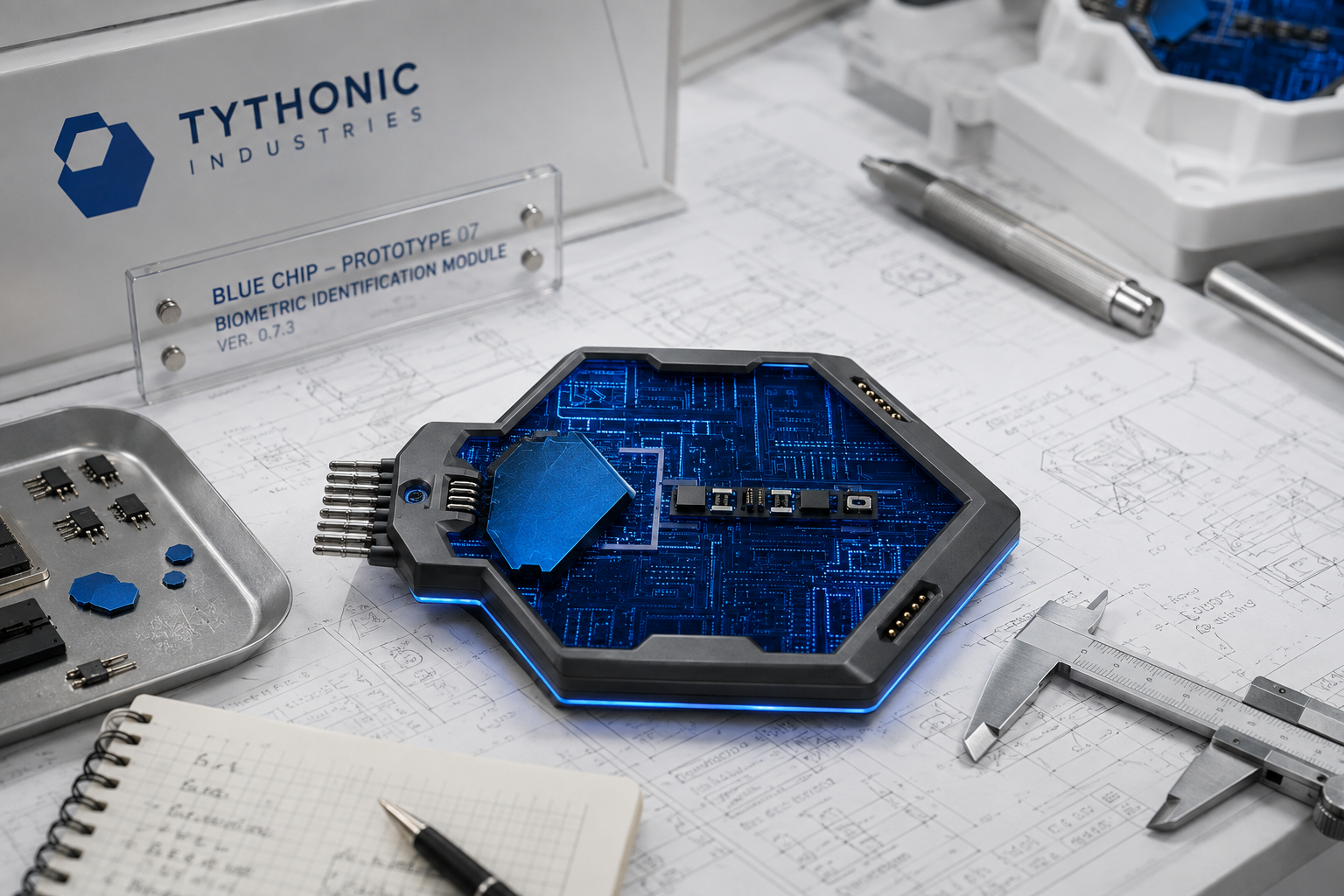
And built a system for survival.
Eventually, every technology meets inside one operating environment.
Life science, prosthetics, biological data, Blue Chip, Transmitters, production and communication infrastructure no longer look like separate research programmes. Inside the Battlegrounds they form a single operational chain.
A Blue Chip alone cannot make the arena function. Identification systems, transmission units, production facilities, field communications, access control and maintenance are required. Product becomes network; network becomes facility; facility becomes infrastructure.
TYTHONIC does not merely exist inside the Battlegrounds. Its technology helps make the Battlegrounds possible. Technology designed under the promise of protecting life becomes capable of identifying, reconnecting and administrating survival.
The most unsettling quality of TYTHONIC is therefore bureaucratic normality. Everything can be framed as standards, safety, serial numbers, authorised access and quality control. The visual identity should feel less like a villain and more like an institution that already knows how to operate the future.
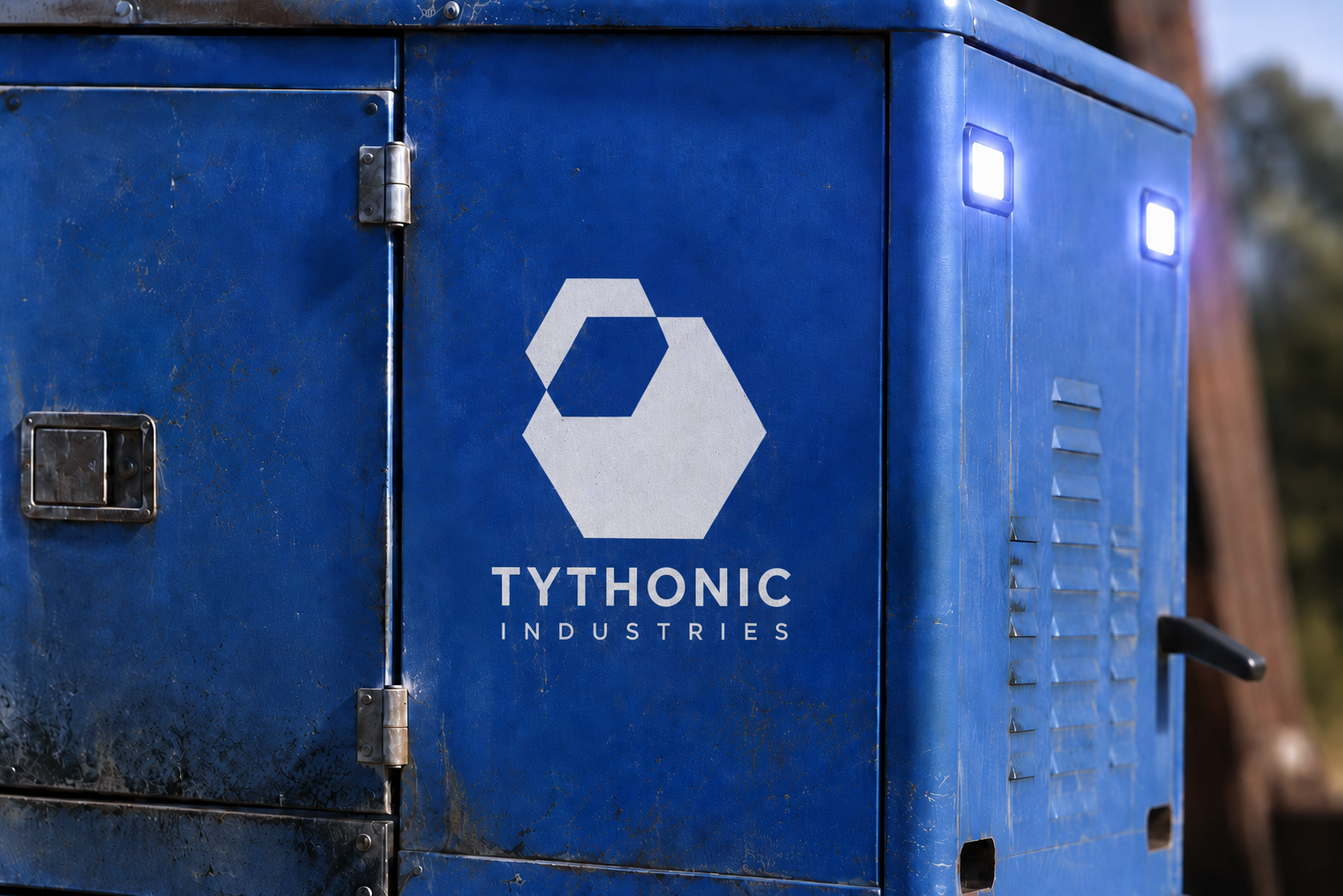
The stronger the narrative, the more disciplined the identity must become.
TYTHONIC should not look like a speculative technology startup. It is imagined as an institution that has existed since the 1970s while operating across medicine, biological data, industrial equipment, secure facilities and Battleground infrastructure.
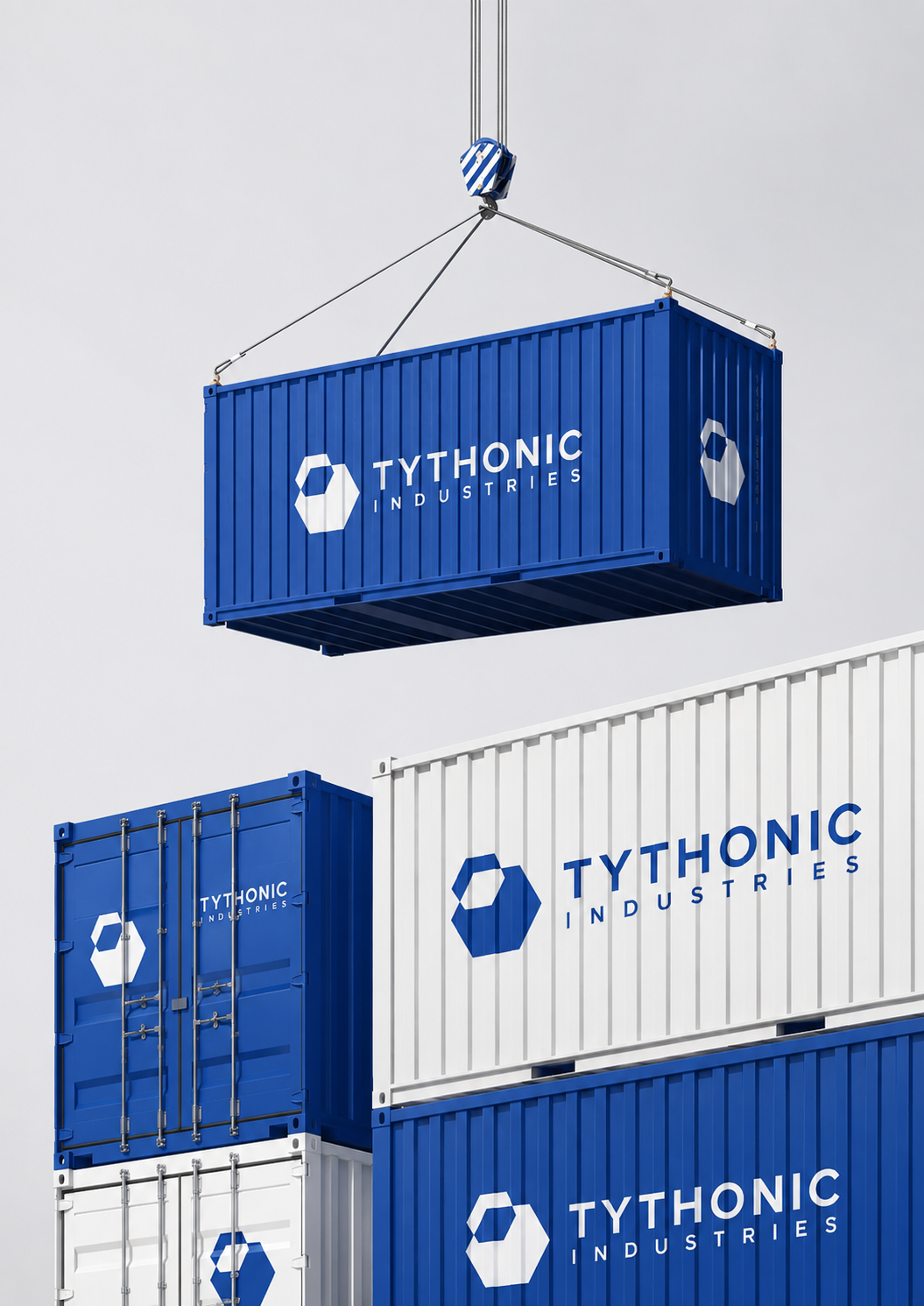
The design task is therefore not to create more graphics, but to make one visual rule survive across more environments. The same mark has to create trust on a lab coat, act as a technical identifier on a Blue Chip, remain legible on a transmitter and define ownership on a building or container.
Division, Access Level, Product Code, Serial, Archive and Field Unit become as important as the logo itself. CI is treated as an operating structure that makes organisational scale visible.
Institutional stability appropriate to life science and medicine.
Information structures repeated without ambiguity across products and documents.
Technology expressed through function, materials and data rather than decorative futurism.
A single identity connecting laboratory, factory, field equipment and infrastructure.
Not a brand imagining the future,
but an institution already operating it.
The visual system borrows more from long-established pharmaceutical and industrial standards than from startup futurism: one strong blue, generous white space, restrained sans-serif typography, repeatable grids and disciplined symbol geometry.
The dystopian tone is intentionally restrained. The fear comes from normality — from a system that looks credible, professional and administratively complete enough to make ethically disturbing operations feel routine.
Distance and credibility before friendliness.
The same rules from business card to container.
Serials, divisions and access data take priority.
Contrast replaces decorative colour variety.
Scale, spacing and reversal are controlled; form is not reinterpreted.
Corporate credibility strengthens the unease.
Keep the identity. Refine the system.
This is not a full rebrand. Existing world-building cues — logo, colour, facilities and product language — are retained and developed into a more complete corporate identity system.
The intervention is focused on combinations, spacing, positive/reverse usage, typography, information hierarchy and application rules. The question is not how to redesign the symbol, but how to make it behave consistently across the organisation.




One company. Two voices.
Externally, TYTHONIC speaks like a calm, humane and credible life-science corporation. Internally, equipment and security systems use short, unemotional commands. Corporate Voice speaks about continuity; System Voice speaks about identification, registration, connection and authority.
Advancing Life. Preserving Humanity.
Keeping you close to what matters most.
AUTHORIZED PERSONNEL ONLY.
BIOMETRIC SIGNATURE VERIFIED.
CONTINUITY STATUS: ACTIVE.
A device became a network.
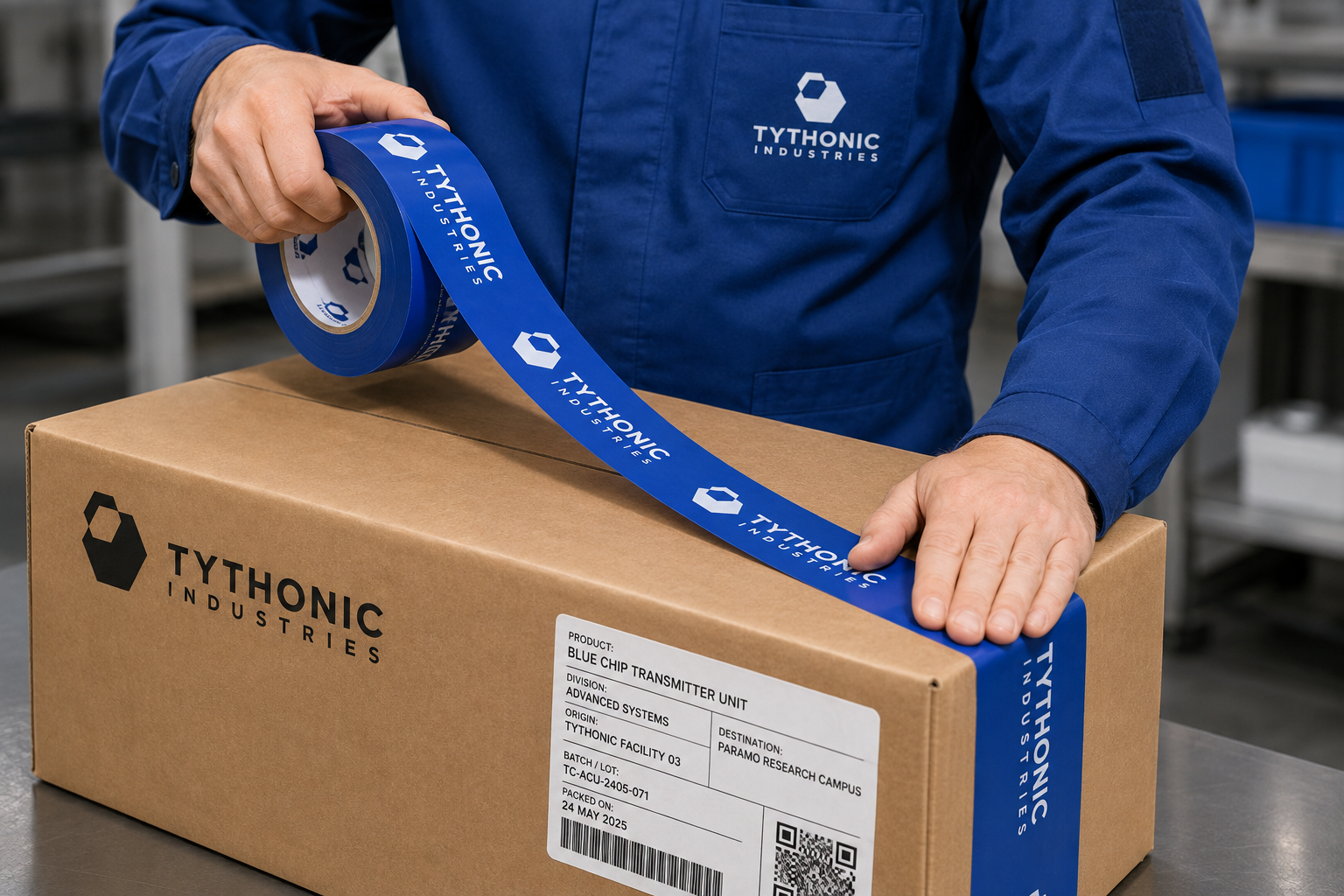
Blue Chip is developed as a product ecosystem spanning Prototype, Production, QC, Packaging, Technical Information, Transmitter and Field Infrastructure. Product identity and corporate identity use the same rules so the technology reads as something TYTHONIC researches, manufactures and maintains.
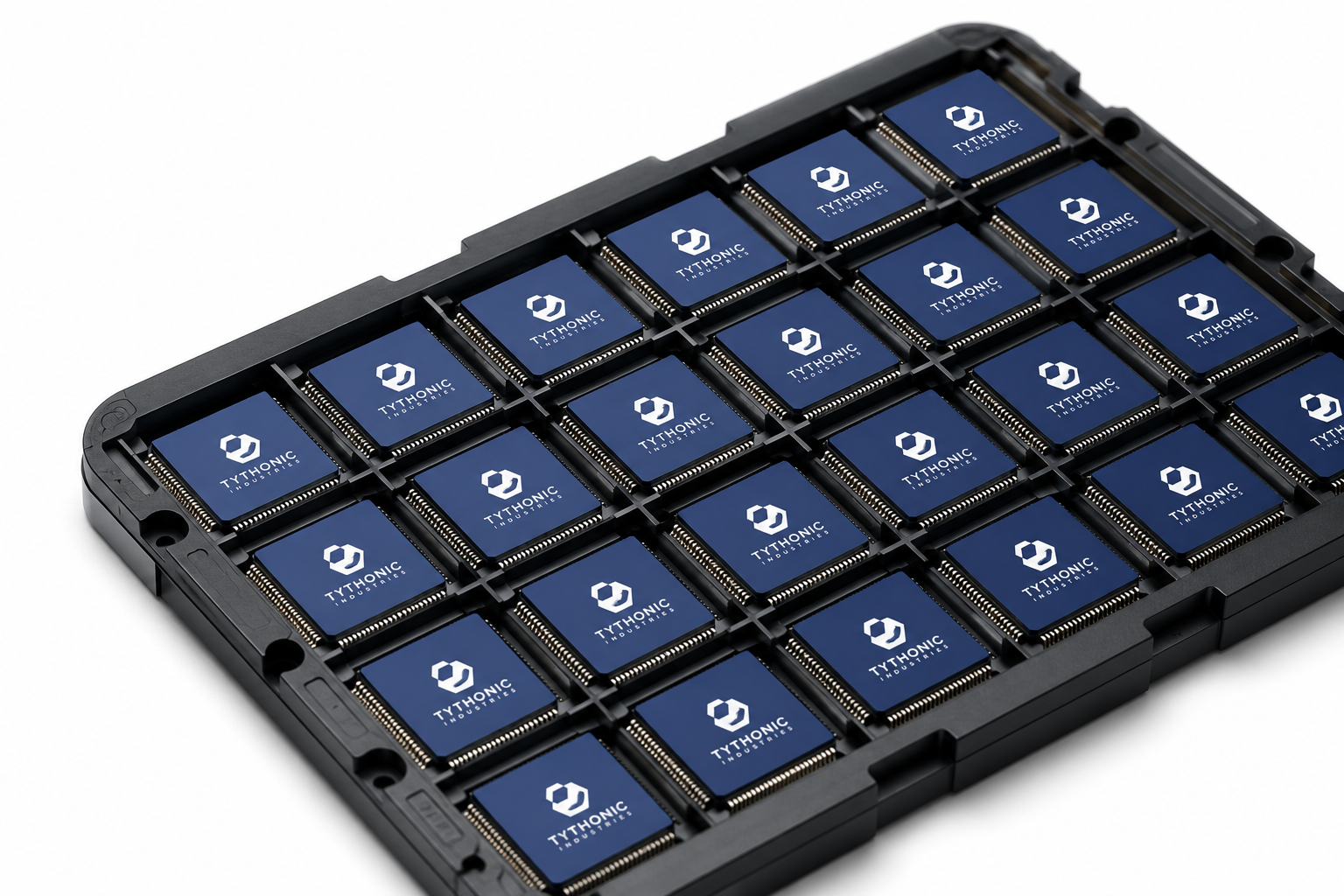
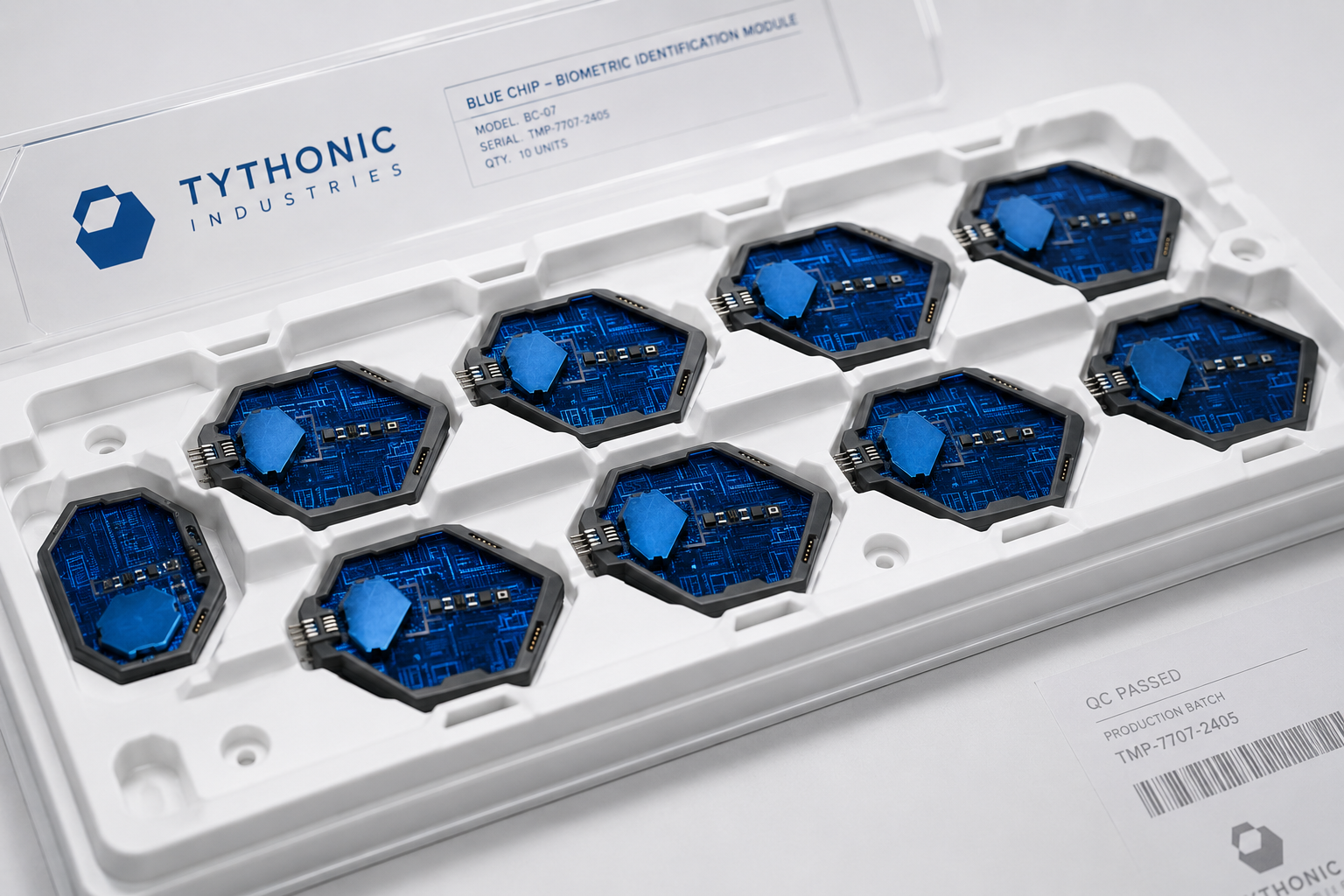
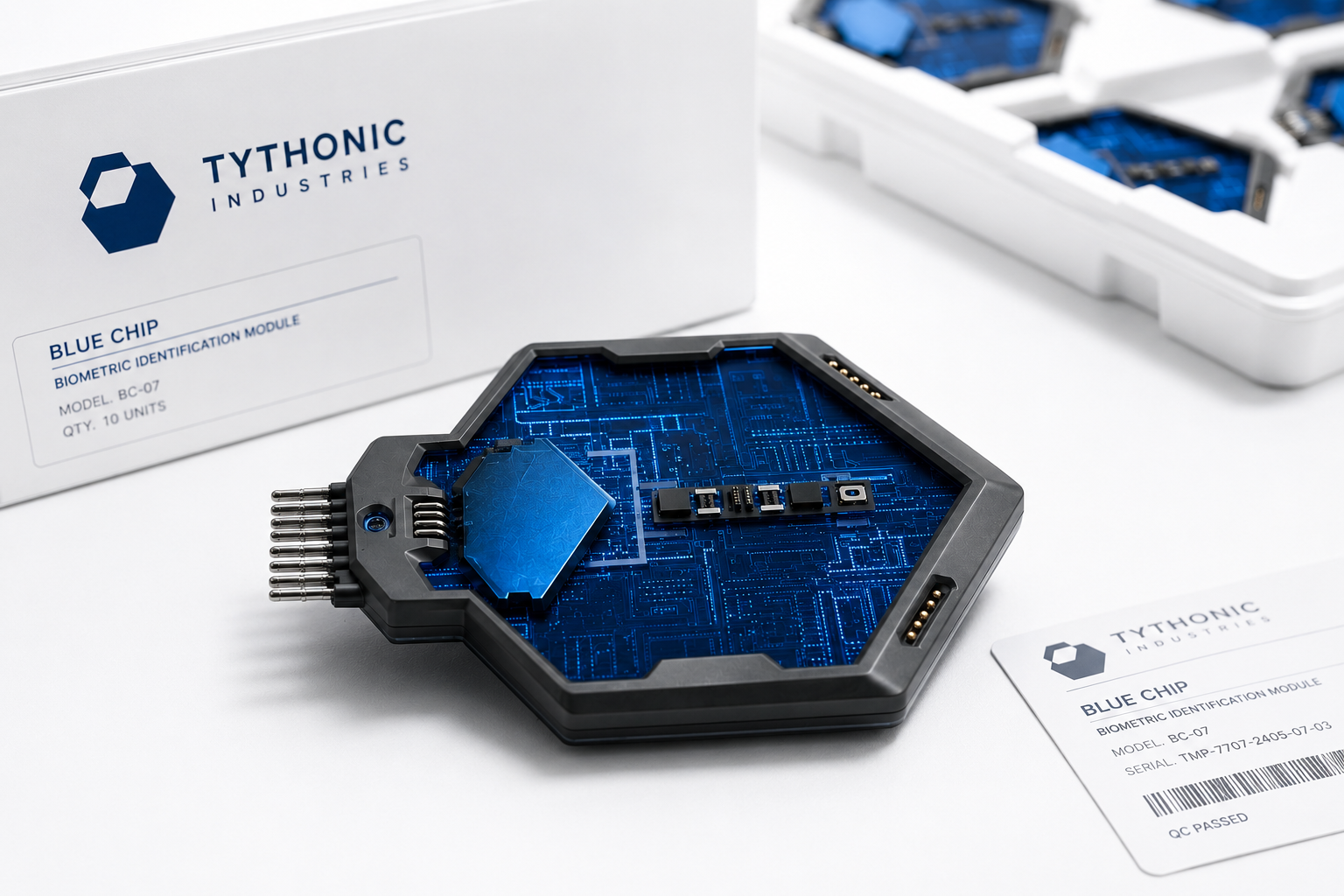
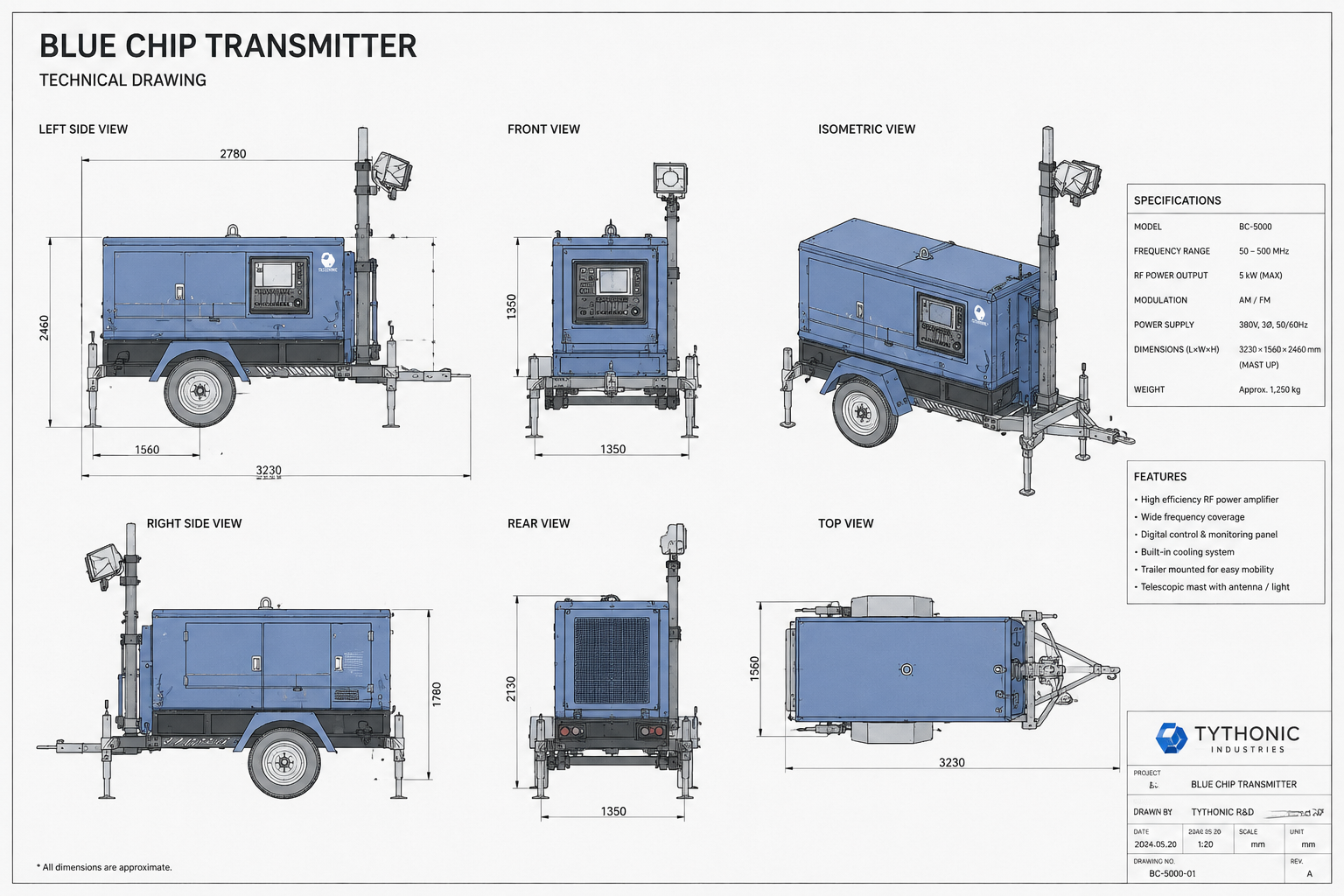
One identity, from the laboratory to the field.
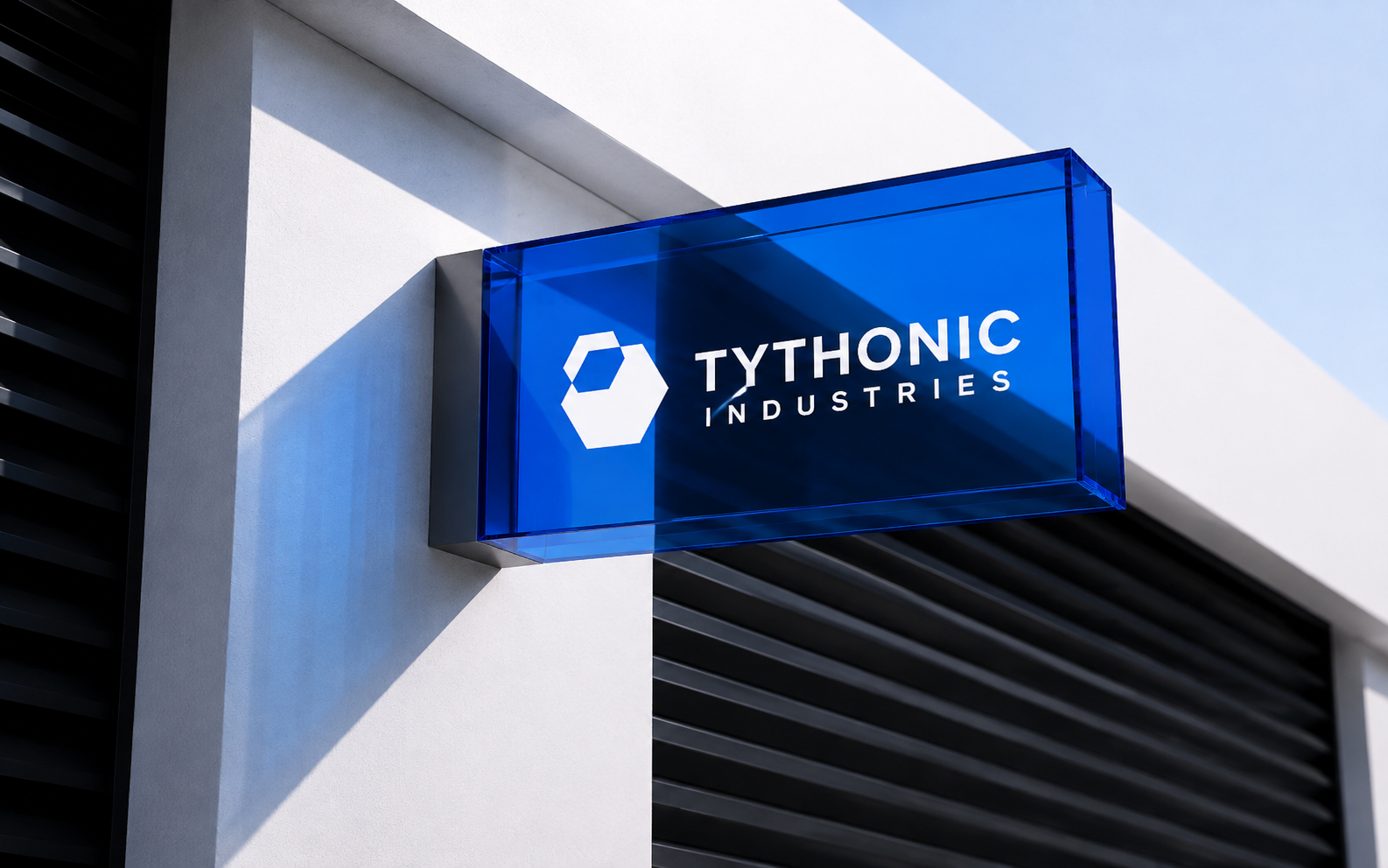
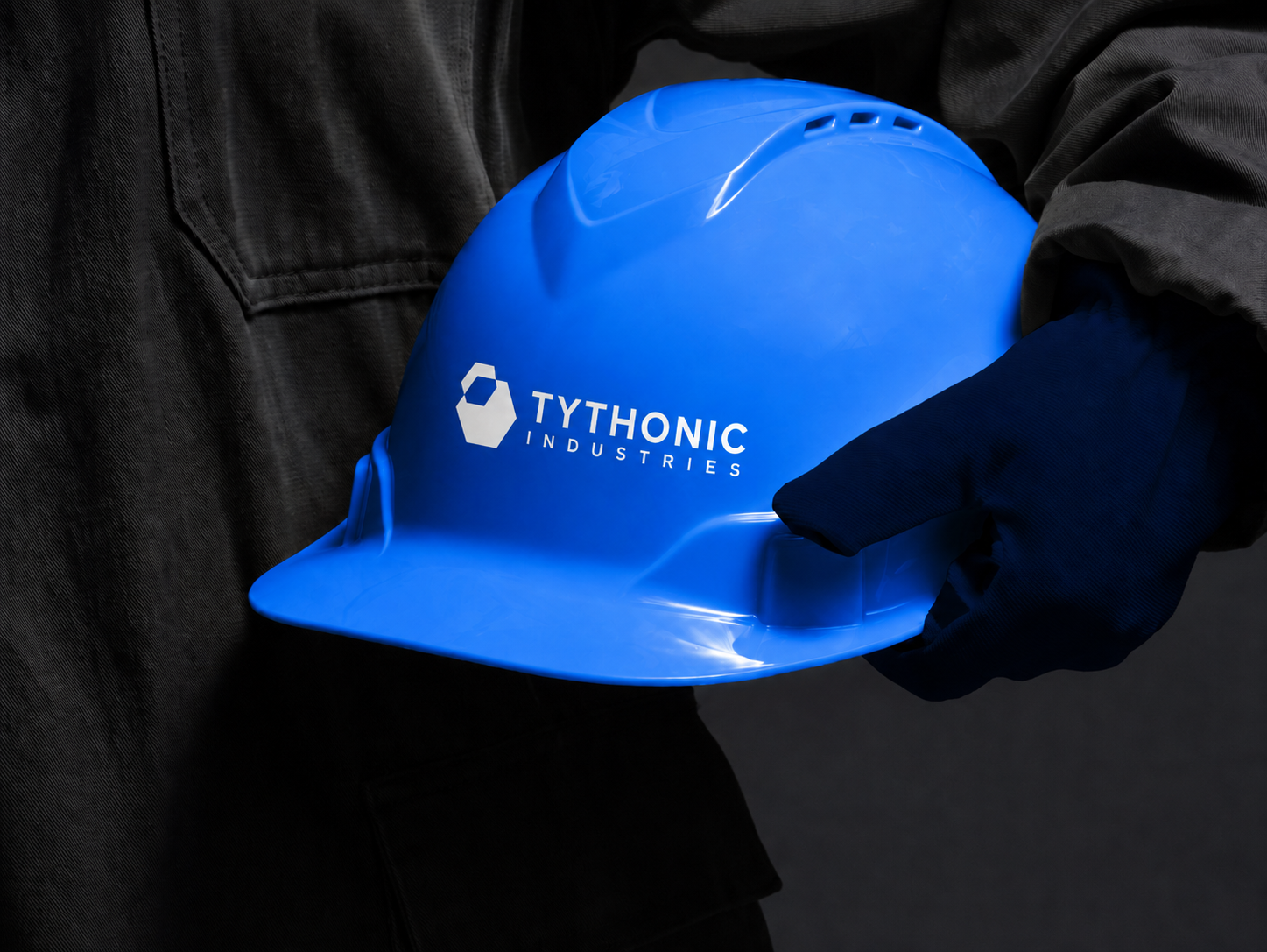
Applications are organised as evidence of organisational scale rather than as an undifferentiated mockup gallery. Four categories show how one CI behaves across people, products, industrial systems and space.
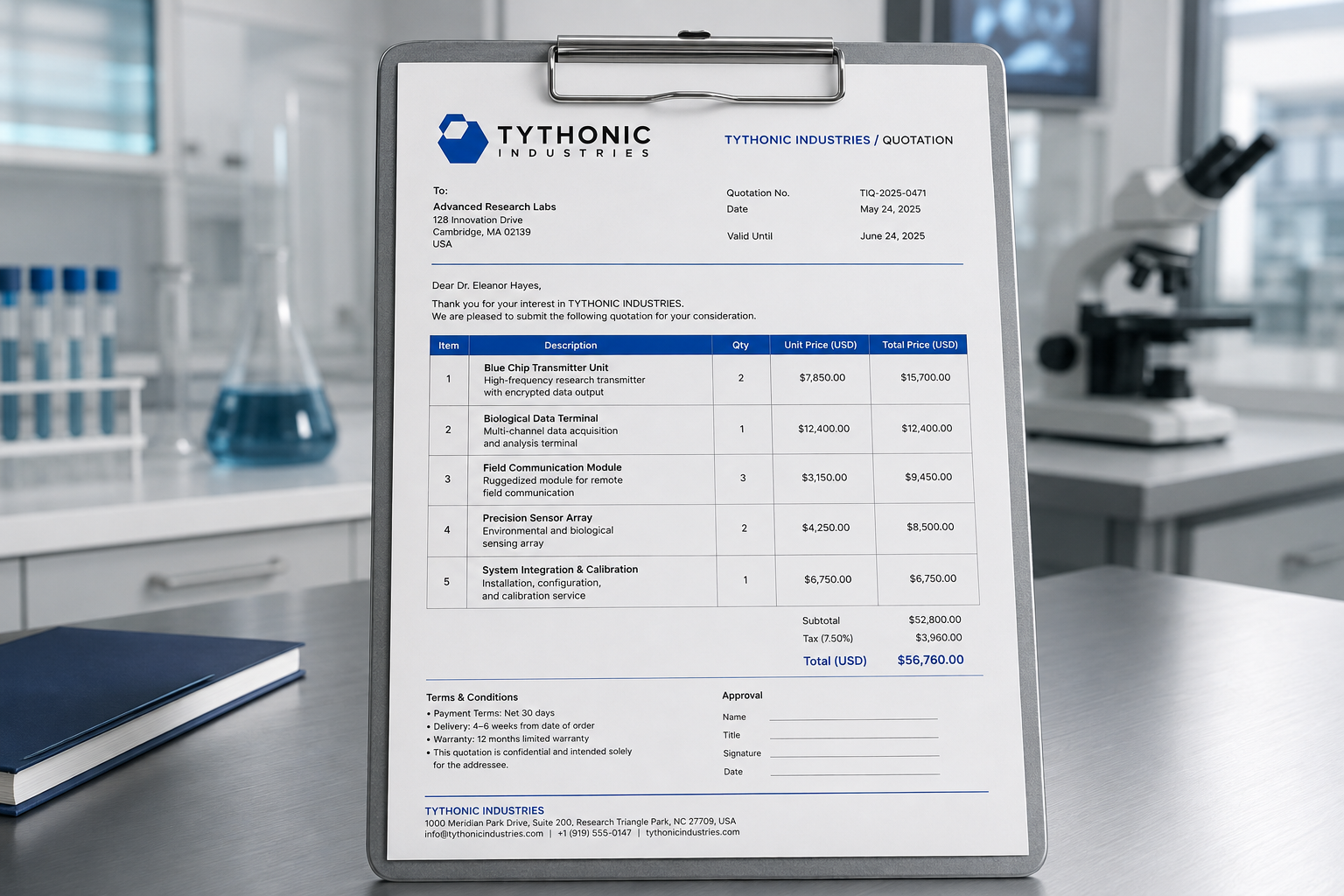
Documents, people and authority.
Stationery, identification, access cards and uniforms prioritise names, divisions, roles and access levels.
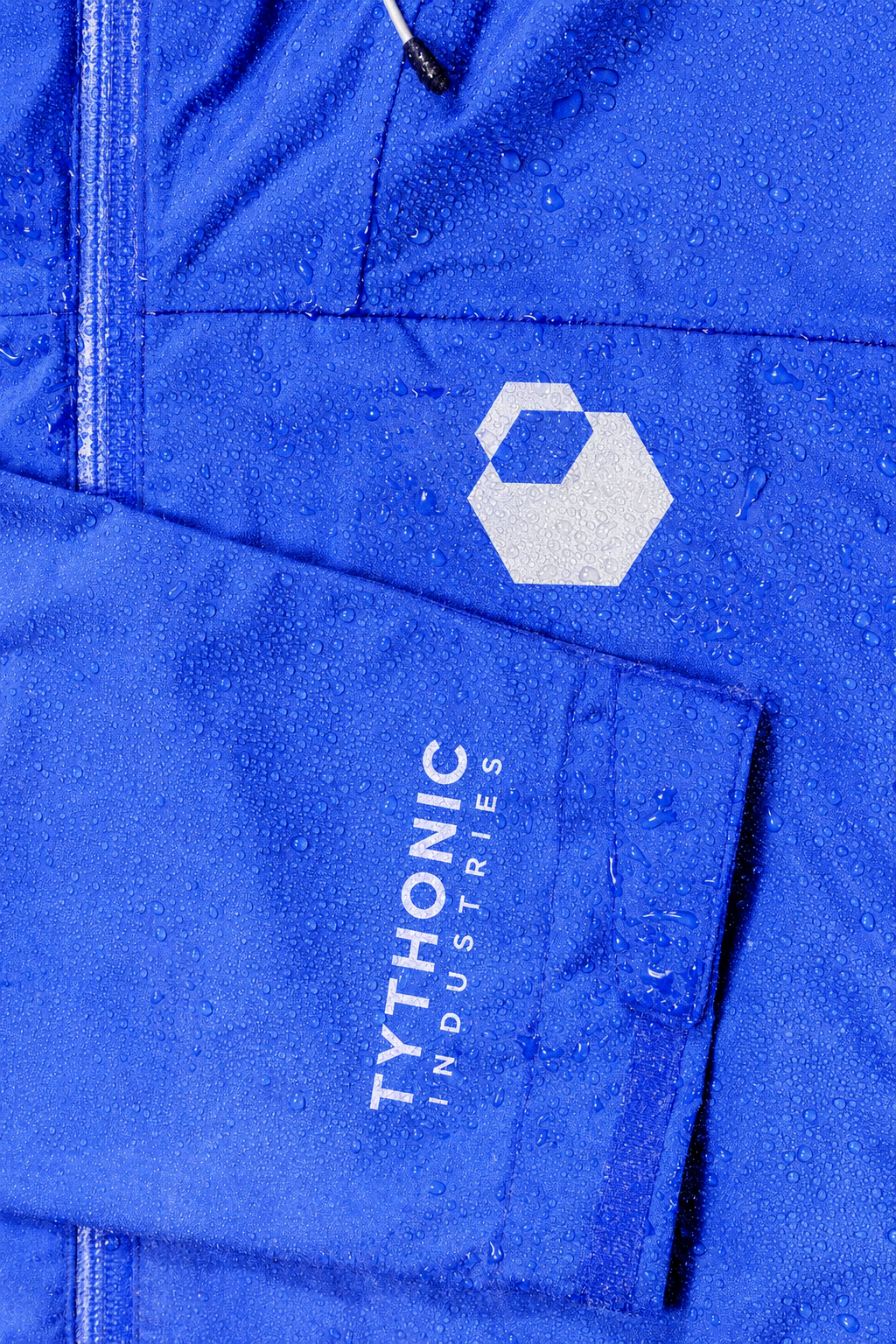
Turning research into a product platform.
Research, production, packaging and technical documentation repeat the same product codes, symbol and information system.
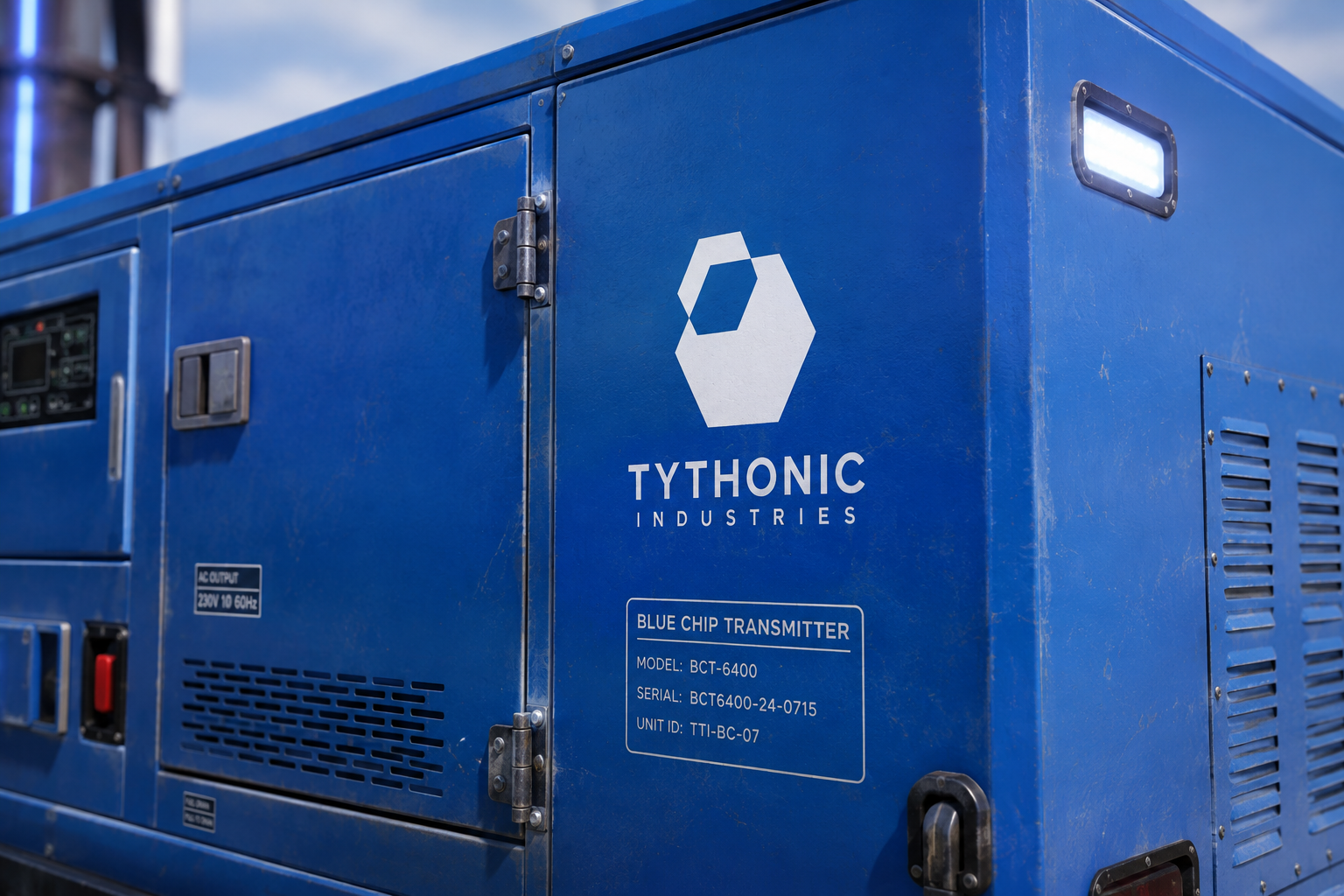
In the field, identity becomes identification.
Transmitters, equipment and field systems use TYTHONIC BLUE, disciplined symbol geometry and concise technical labels.

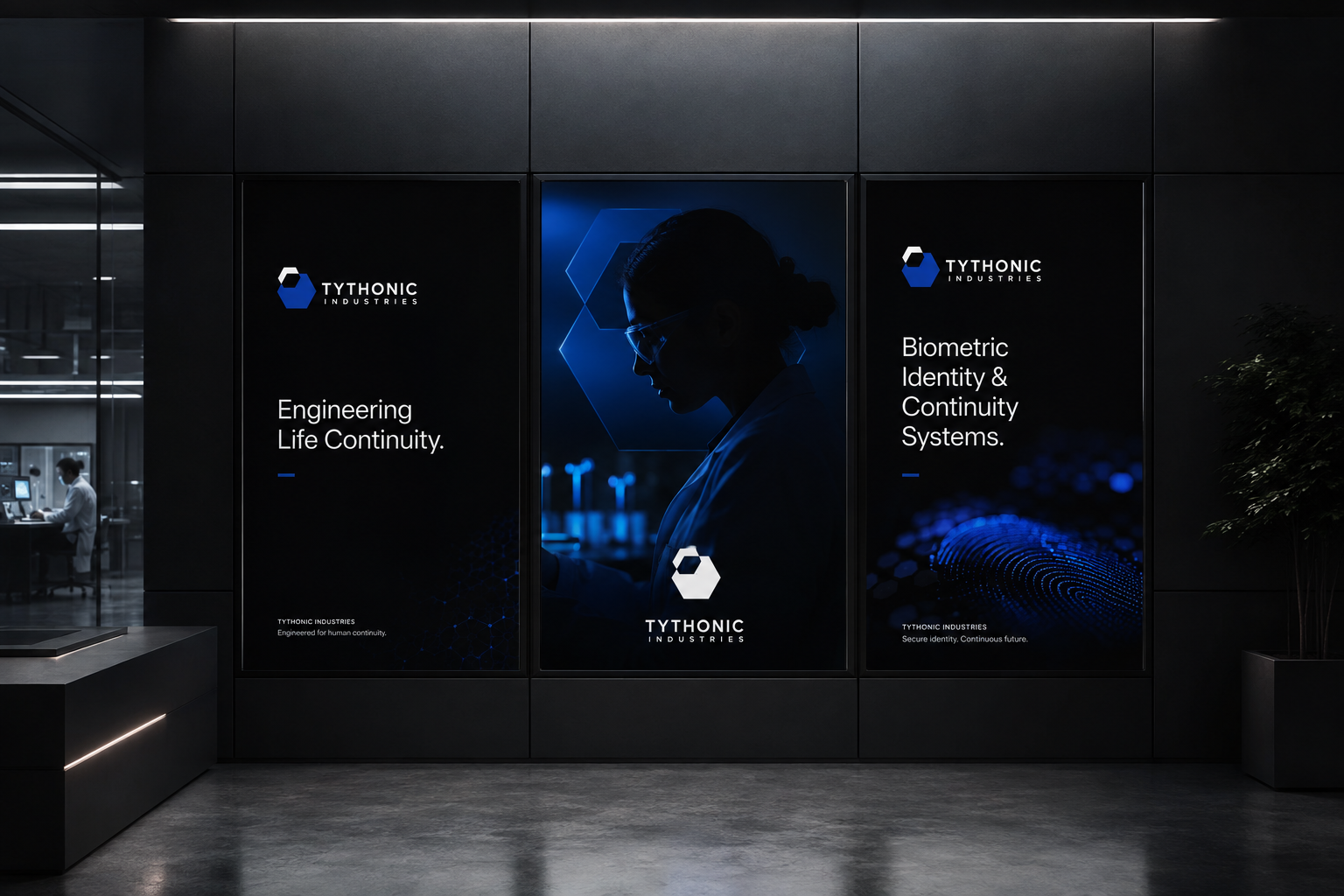
Scale is completed in space.
Facility signage, research environments and communication panels make TYTHONIC feel like an institution with multiple sites, departments and operational layers.
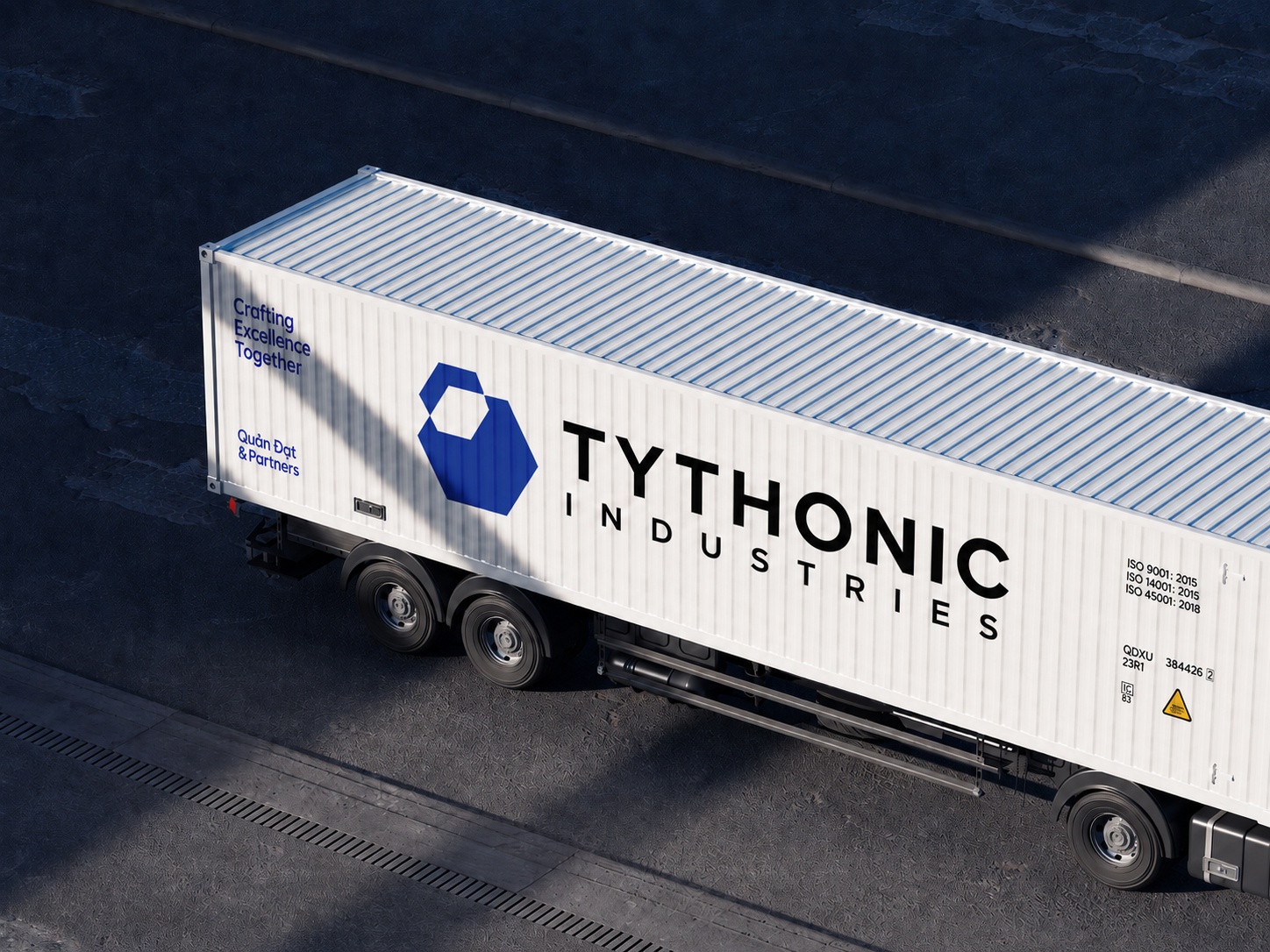
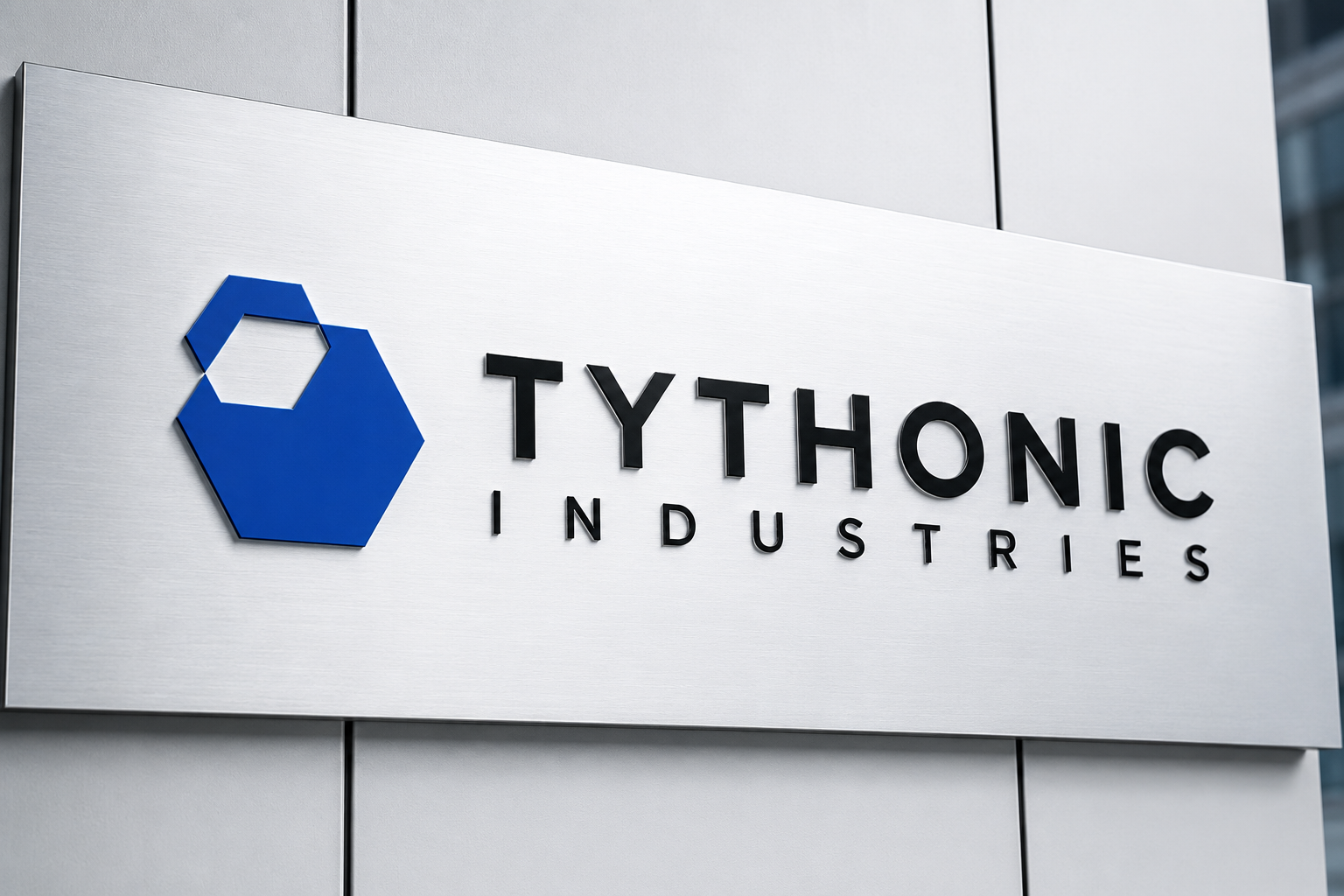
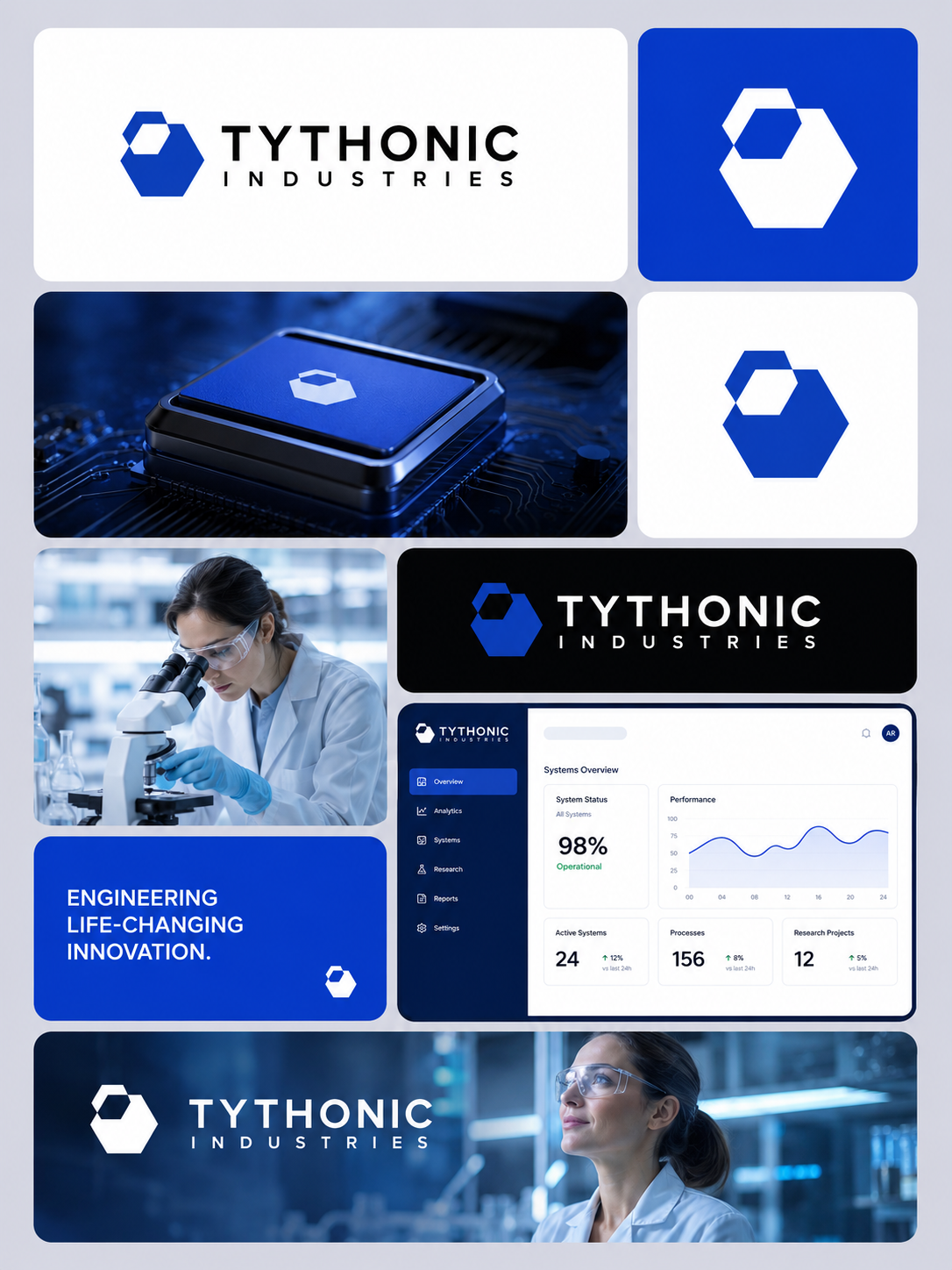
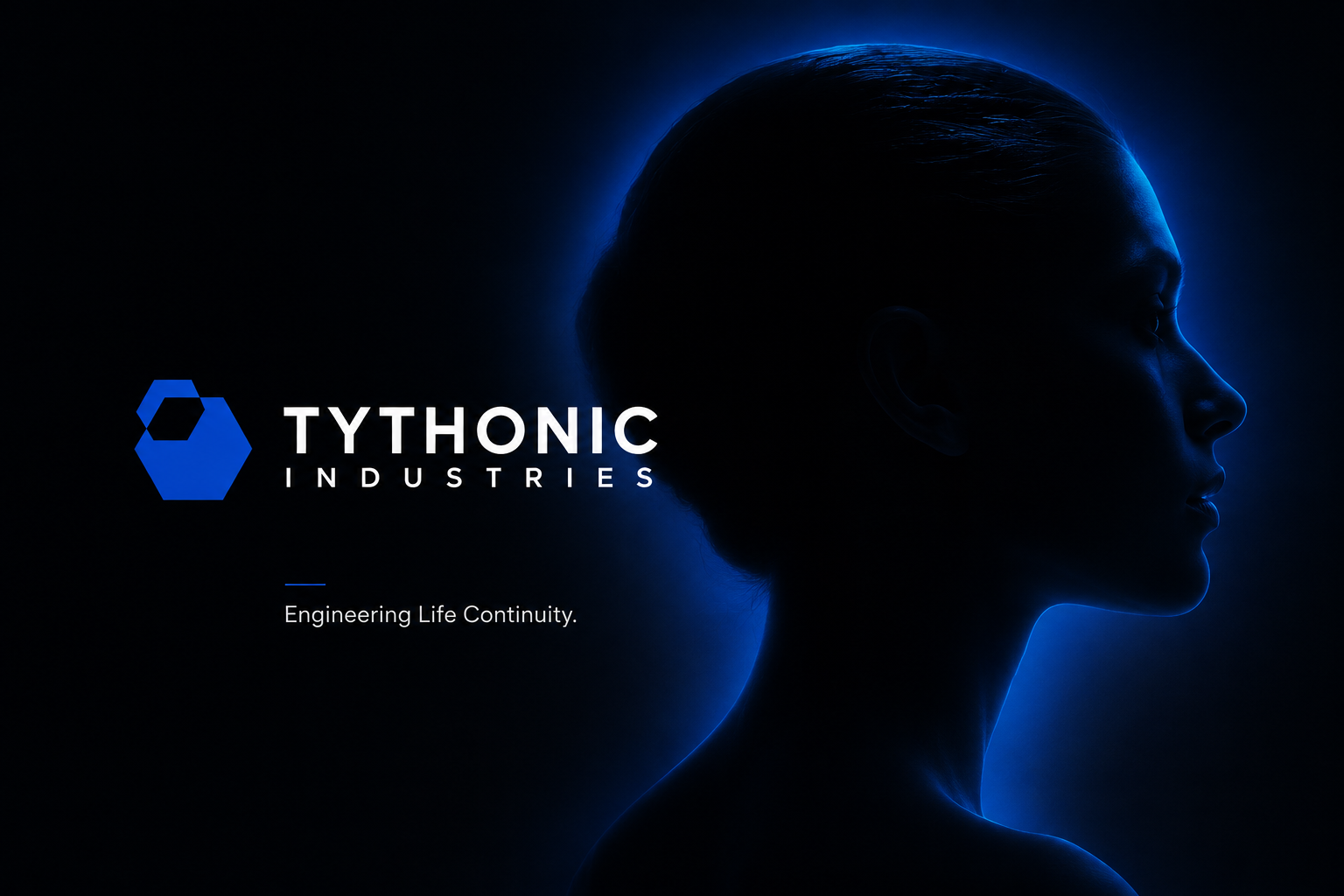
ENGINEERING LIFE CONTINUITY.
The project connects fragments of lore, language, technology and imagery into one corporate narrative and identity system. Instead of changing the logo, it designs the institutional world in which that logo can operate consistently.